The Gentle Collective Blog

Beyond Participation: Why Meaningful Experiences Matter for Psychological Wellbeing
Beyond Participation: Why Meaningful Experiences Matter for Psychological Wellbeing
What if meaningful participation was about more than simply getting out into the community?
At The Gentle Collective, we believe that the value of an experience isn't necessarily measured by where someone goes or what they do, but by what that experience means to them.
This perspective is reflected in peer-reviewed research co-authored by The Gentle Collective's founder, Jane Gentle, and published in Tourism Recreation Research in 2026.
The article, Disability-Inclusive Tourism and Psychological Wellbeing, explores how accessible tourism conditions may influence opportunities for psychological wellbeing.
While the research focuses on disability-inclusive tourism, these ideas also provide a valuable perspective for thinking about meaningful community participation.
A walk along the beach might provide an opportunity to decompress. A pottery class might encourage creativity and engagement. Learning to cook a new meal might build confidence and a sense of achievement.
Equally, meaningful support may sometimes involve slowing down, staying home and creating space to rest.
The important question isn't simply, "What activity did we do today?" It's "What mattered to the person experiencing it?"
At The Gentle Collective, this thinking informs our commitment to intentional, participant-led support that respects individual choice, interests, circumstances and goals.
We recognise that meaningful participation is personal, and that the right support can help create opportunities for connection, confidence, independence and wellbeing.
Read the research
Gentle, J., Lesar, L., Filep, S., & Moyle, B. (2026). Disability-inclusive tourism and psychological wellbeing. Tourism Recreation Research, 1–6.
https://doi.org/10.1080/02508281.2026.2725945
This blog discusses and applies concepts from the published research to the philosophy of The Gentle Collective. The article presents a conceptual perspective rather than empirical evidence of outcomes from The Gentle Collective's services.
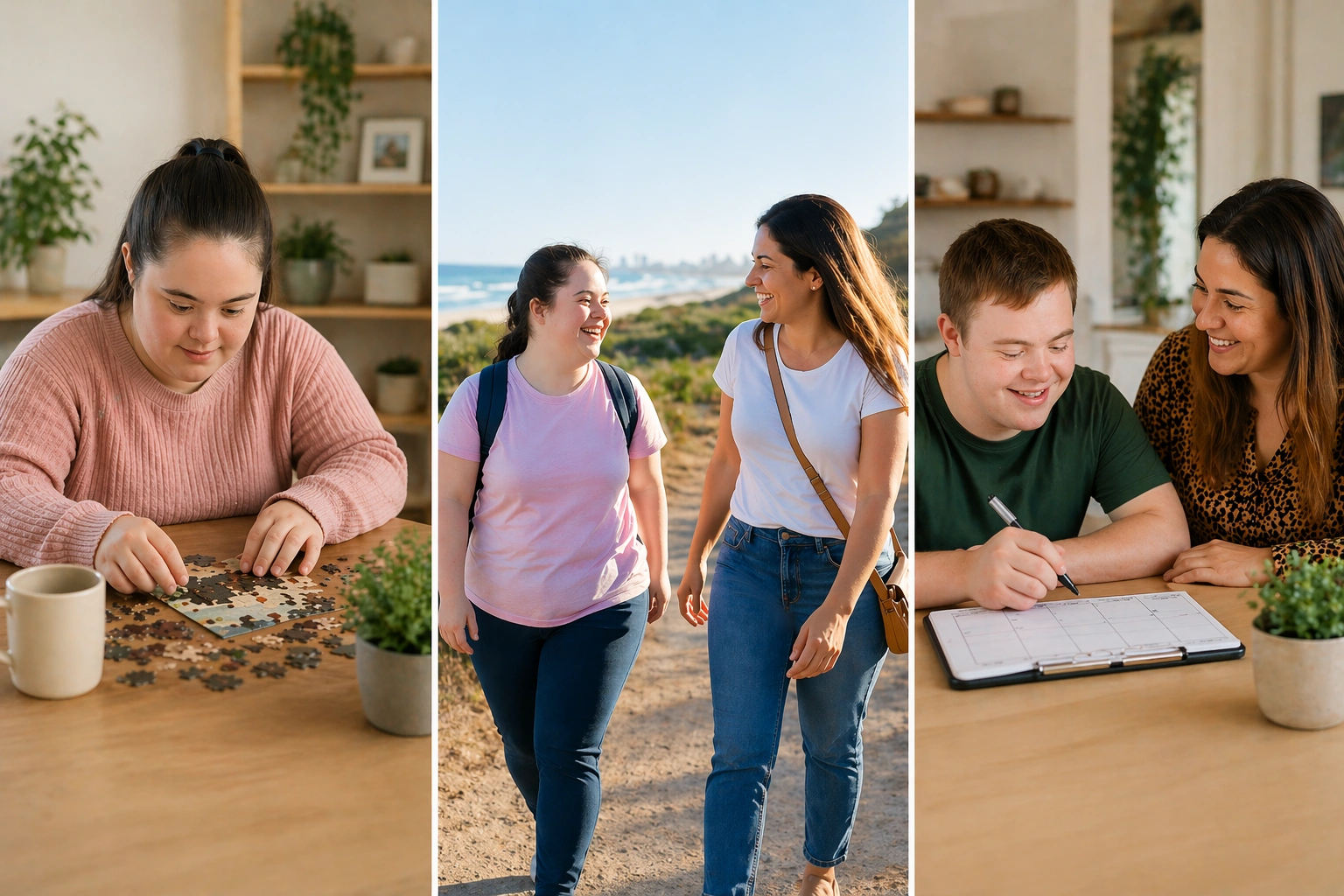
Community participation is not just an outing: The activity is the setting. The outcome is the growth.
Community participation is not just an outing: The activity is the setting. The outcome is the growth.
Why community participation matters
Community participation should never be reduced to simply filling time or attending activities. When support is delivered well, it can help participants build the confidence and skills needed to take part in life in a way that feels meaningful to them.
For some people, this may mean developing confidence in familiar public places. For others, it may mean trying new environments, building friendships, joining community groups, practising transport skills, preparing for employment, or learning how to speak up about preferences and choices.
There is no single version of meaningful participation. It needs to be shaped around the person.
The difference between an outing and an outcome
An outing might be: “We went to a café.”
Outcome-focused support asks: “What did the participant practise, choose, communicate, manage or build during that café visit?”
That shift matters.
A café visit could involve choosing from a menu, waiting in line, ordering, paying, managing noise, asking for help, starting a conversation, or staying calm when plans change. These may seem like small moments, but they can be meaningful steps toward confidence and independence.
The same applies to everyday experiences. A trip to the shops can support planning, budgeting, social interaction and decision-making. Attending a class can support routine and connection. Catching a bus can support independence, problem-solving and familiarity with community spaces.
The goal is not to make every activity complicated. It is to make support purposeful.
Good support does not take over
Meaningful community participation should be participant-led. This means the participant’s interests, goals, preferences, strengths and pace should shape the support.
Good support does not rush in and do everything for the person. It supports choice, dignity and confidence by stepping in where needed and stepping back where possible.
Sometimes this might mean modelling a skill first, offering a prompt or waiting quietly while the participant has a go, or reflecting afterwards on what went well and what they may like to try next time.
That balance matters.
Confidence is a real outcome
Confidence can be the difference between wanting to join in and actually feeling able to. It can affect whether someone feels comfortable entering a new place, speaking to unfamiliar people, making choices, trying again after a difficult experience, or taking the next step toward a goal.
This is why community participation needs to be intentional. It is not just about exposure to the community. It is about supported, respectful participation that builds capability over time.
What meaningful participation can look like
Meaningful participation may look ordinary from the outside. That is part of the point.
It might look like:
· ordering a coffee with less prompting than last time
· choosing between two activities and explaining why
· travelling to a familiar place with growing confidence
· joining a community group for the first time
· practising conversation with a shop assistant
· managing a change in plans without leaving immediately
· using a phone to check directions
· attending a volunteering opportunity
· preparing for a work-like environment
· saying, “I want to try this myself”
These are not just little tasks. They are building blocks.
Over time, they can support confidence, independence, communication, self-advocacy, community connection and a stronger sense of identity.
Why intentional support matters
Community participation works best when support is connected to the participant’s goals.
That does not mean every session needs to feel clinical or rigid. The best support often feels natural, relaxed and human. But behind that support should be a clear understanding of what the participant is working toward.
At The Gentle Collective, we think about:
· What goal does this support connect to?
· What skill or confidence is being built?
· What choices is the participant making?
· What barriers are showing up?
· What progress is emerging over time?
· How can support be adjusted as confidence grows?
· How did this experience support the participant to build confidence, independence or capability?
The Gentle Collective approach
The Gentle Collective provides intentional, participant-led support that focuses on building real-world capability through meaningful everyday experiences.
We support participants to practise skills, explore interests, build routines, strengthen confidence, connect with community, and take steps toward greater independence. This may include social and community participation, capacity building, employment readiness, transport confidence, decision-making, communication, and practical life skills.
Community participation is not just an outing. It can support choice, dignity and self-belief. At The Gentle Collective, that is the heart of our work.
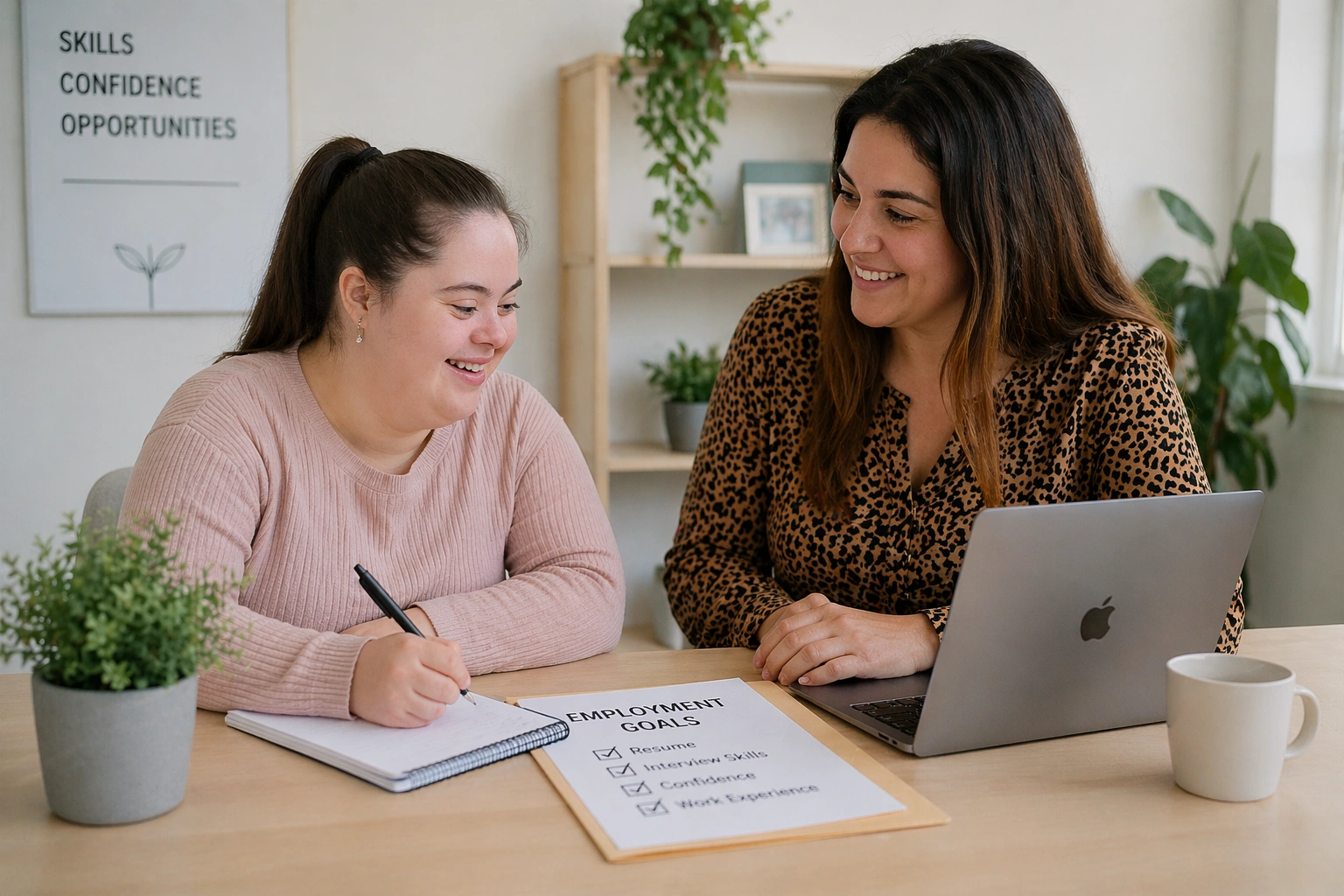
Is your NDIS support building capacity? Five questions to ask
Is your NDIS support building capacity? Five questions to ask
Is your NDIS support building capacity? Five questions to ask
Capacity building is often talked about in NDIS support, but it should mean more than simply attending activities or keeping busy. Good support should help a participant build skills, confidence, choice and independence in everyday life.
Capacity building can look different for every person. It might be practising communication at a café, planning a bus trip, choosing an activity, managing a change in routine, building confidence in public places, preparing for work or learning to ask for help when needed.
What does capacity building actually mean?
In the NDIS context, capacity building is about supporting a person to develop skills, independence and confidence over time. It is not about doing everything for someone. It is about providing the right level of support so the person can practise, participate, make choices and gradually build capability.
For one participant, this might mean learning how to navigate a community space with confidence. For another, it may mean developing routines, improving communication, preparing for employment, building social confidence, or learning how to manage everyday decisions.
There is no single version of capacity building. It should be shaped around the participant’s goals, strengths, support needs and pace.
Five questions to ask
If you are wondering whether support is truly building capacity, these questions can help.
1. What goal does this support connect to? Support should clearly relate to the participant’s goals, needs and everyday life.
What skill or confidence is being built? This may include decision-making, communication, routines, emotional regulation, transport, money handling or social connection.
Is the participant taking the lead where possible? Support should encourage choice, dignity of risk and self-advocacy, not simply do things for the person.
Is support being adjusted over time? As confidence grows, good support may shift from doing, to prompting, to stepping back.
Is progress being noticed and documented? Small steps matter. Progress should be clear enough that participants, families and support coordinators can see what is changing. Good documentation does not need to be complicated. It just needs to show the link between the support provided, the participant’s goals, and the progress being made.
What to discuss with your support worker
A helpful support session often starts with a conversation about what the participant wants to build, not just where they want to go.
You might discuss:
what goal the support relates to
what the participant would like to practise
what feels difficult, overwhelming or unfamiliar
what level of prompting or support feels helpful
what the participant wants to try doing more independently
what progress would look like over time
what worked well last time
what the next small step could be
These conversations help keep support focused, respectful and connected to the participant’s goals.
They also help avoid support becoming routine for the wrong reasons. Going to the same place every week is not automatically a problem. Familiar routines can be valuable. But it is worth asking: is this routine building confidence, connection or independence? Or has it become passive?
That question matters.
Capacity building should feel human
Capacity building does not need to feel clinical, forced or formal. In fact, the best support often feels natural.
It might happen during a walk, a coffee, a bus trip, a volunteering opportunity, a shopping task, a group activity or a conversation in the car. What matters is that the support has purpose behind it.
The participant should feel respected, not managed. Encouraged, not pushed. Supported, not controlled.
At The Gentle Collective, we believe capacity building works best when support is participant-led, intentional and grounded in everyday life. We focus on building confidence, independence and real-world capability through meaningful experiences that connect to the participant’s goals.
Because capacity building is not just about what someone does today.
It is about what they are becoming more confident and capable of doing tomorrow.
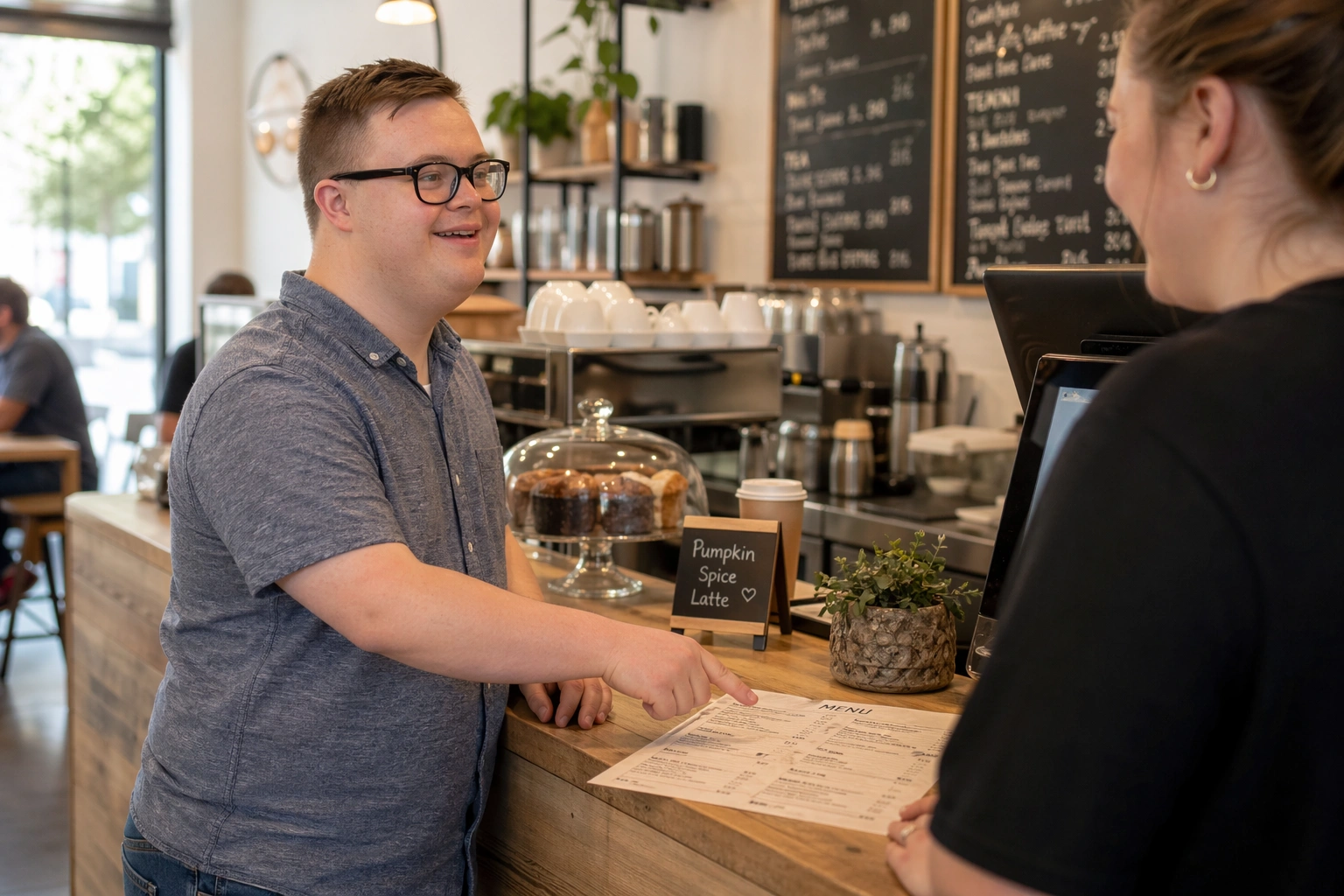
What the latest NDIS reform announcement means for participant-led support
What the latest NDIS reform announcement means for participant-led support
This week the Australian Government announced changes to the NDIS, with a focus on sustainability, clearer eligibility, fraud prevention, provider quality, and changes to some participant support budgets. For many, reform announcements can feel overwhelming, especially when they relate to supports that help people take part in everyday life and stay connected to their community.
At The Gentle Collective, we believe it is important to respond carefully, not fearfully. The NDIS may be changing, but the need for meaningful, person-centred support has not changed. In fact, these reforms make it even more important that supports are intentional, goal-aligned and clearly connected to participant outcomes.
What has been announced?
On 22 April 2026, the Australian Government announced reforms aimed at strengthening the NDIS by reducing fraud, slowing cost growth, clarifying eligibility, and improving support quality.
One of the most relevant changes for social and community participation providers is that participant support budgets for social, civic and community participation supports and capacity building daily activities are expected to be progressively adjusted from 1 October 2026. The Government has stated that these changes will not affect supports essential to participants’ critical care and daily living needs.
The Government has also announced a $200 million Inclusive Communities Fund, designed to support community organisations to host genuine participation activities.
Why this matters for participants
Social and community participation is sometimes misunderstood as simply “going out” or “doing activities”. But for many participants, the right support can build confidence in public places, strengthen communication and decision-making, develop routines, reduce isolation, and support practical life skills. When participation is supported well, it is not just an activity. It is a pathway toward confidence, capability and greater choice.
Participation should be meaningful, not performative
A café visit, beach walk, shopping trip or community event should not be treated as the outcome by itself.
The real question is: what is the participant building through that experience?
For one person, ordering at a café may support communication, confidence and money handling. For another, visiting a new place may support emotional regulation, decision-making and tolerance of unfamiliar environments. For someone preparing for work, community participation may help build time management, transport confidence, social skills and independence.
The activity is the setting. The outcome is the growth.
That is where support needs to be thoughtful. Otherwise, community participation risks being reduced to “just an outing”, and that does not reflect the real value these supports can provide when delivered well.
What this means for The Gentle Collective
The Gentle Collective has been built around intentional support from the beginning. Our focus is not on filling time or creating generic outings. Our focus is on supporting participants to build real-world capability through meaningful, participant-led experiences.
This includes support to develop:
· confidence in community settings
· independence with everyday tasks
· communication and social confidence
· decision-making skills
· routines and planning
· employment readiness
· self-advocacy and choice
· practical participation skills
The Gentle Collective’s approach is grounded in three simple principles.
1. Support should be participant-led. The participant’s goals, preferences, strengths and pace should shape the support.
2. Support should be intentional. Each session should have a purpose connected to confidence, independence, capability or meaningful participation.
3. Support should be reflective and accountable. Progress should be observed, documented and communicated clearly, especially where support coordinators, families or nominees are involved.
This means we look beyond the question, “What activity are we doing today?” and as “How is this support helping build confidence, independence and capacity”
What participants and families can do now
Participants and families do not need to panic, but it is worth becoming clearer about how supports connect to goals. The strongest supports are those that can show what capacity is being built, what barriers are being addressed, and how confidence, independence or community connection are improving over time.
Moving forward with confidence
The NDIS reform environment will continue to evolve. But the direction is clear: supports will need to be more transparent, more accountable and more clearly linked to functional outcomes.
Need support that is intentional, participant-led and focused on meaningful outcomes? The Gentle Collective provides NDIS participant-led, goal-aligned support that focuses on real progress, one intentional step at a time, across the Gold Coast.
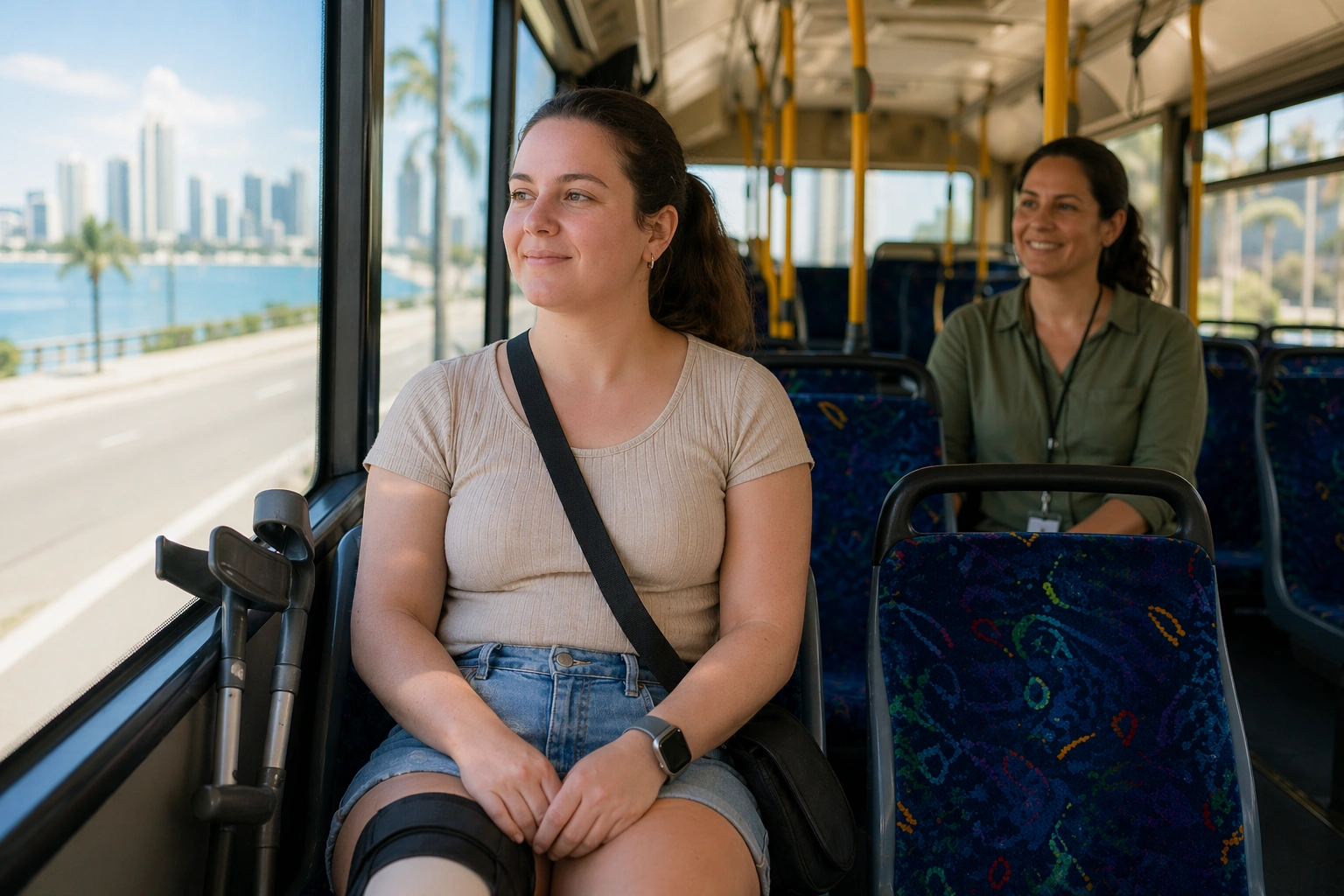
Building independence through meaningful support
Building independence through meaningful support
Support should build independence, not dependence
Good support should not take over someone’s life. It should help a person build the confidence, skills and self-belief to take more of the lead over time.
For NDIS participants, support can play an important role in everyday life. It may help someone access the community, communicate their needs, build routines, try new experiences, prepare for employment, or feel safer in public spaces.
But support should always have a bigger purpose.
What independence really means
Independence does not mean doing everything alone. All of us rely on other people, systems, tools and support at different points in life. For NDIS participants, independence may look different from person to person.
For one person, it may mean ordering their own coffee. For another, it may mean catching public transport with less prompting.
Independence is not about removing support before someone is ready.
It is about providing the right support, in the right way, so the person has more opportunity to participate, choose, practise and grow.
The risk of doing too much
Support workers are often caring people who genuinely want to help. But sometimes, helping too quickly can accidentally take away opportunities for the participant to build confidence.
It can happen in small ways.
Speaking for the participant. Ordering on their behalf. Choosing the activity. Answering questions before they get a chance. Solving the problem too quickly. Stepping in because it feels faster or easier.
These moments may come from good intentions, but over time they can send the wrong message: “I will do this for you.”
Good support sends a different message: “I am here with you while you try.”
That difference matters.
Stepping in and stepping back
One of the most important skills in good support is knowing when to step in and when to step back.
Stepping in may be needed when a participant feels unsafe, overwhelmed, confused or unable to continue without help. It may involve modelling, prompting, reassurance, emotional regulation, or breaking a task into smaller steps.
Stepping back is just as important. It gives the participant space to try, make choices, solve problems and experience success.
Support that builds independence is not passive. It is thoughtful. It notices when help is needed, but it also notices when the participant is ready to do more.
Too much support can limit growth. Too little support can create stress or risk. The right support helps the person stretch without being pushed too far.
Independence grows through confidence
Confidence is often the bridge between wanting to do something and feeling able to try.
When participants are supported to practise real-world skills in respectful, consistent ways, confidence can grow. And as confidence grows, people may begin to take more of the lead.
They may speak up more clearly. Try something unfamiliar. Need fewer prompts. Make more choices. Recover faster after setbacks. Ask for support in a more confident way.
These changes may look small from the outside, but they can be deeply meaningful.
Good support notices these moments. Great support builds on them.
What independence-building support can look like
Support that builds independence may look like:
offering choices instead of making decisions for the participant
encouraging the participant to speak for themselves where possible
using prompts rather than taking over
allowing extra time to process and respond
practising skills in real-world settings
gradually reducing prompts as confidence grows
respecting the participant’s pace, preferences and goals
Often, independence is built in ordinary moments: ordering lunch, checking a bus time, paying for something, choosing where to sit, asking a question, joining a group, managing disappointment, or trying again.
The activity is the setting. The outcome is the growth.
The Gentle approach
At The Gentle Collective, we believe support should be warm, respectful and intentional.
We do not see independence as something that has to be rushed or forced. We see it as something that can be built gently through trust, consistency and meaningful everyday experiences.
Our support focuses on helping participants build confidence, practise real-world skills, strengthen routines, make choices, connect with community and take steps toward greater capability.
Good support should help people grow.

Working together to support meaningful participant outcomes
Working together to support meaningful participant outcomes
NDIS support works best when everyone is moving in the same direction.
For participants, that means support feels clear, respectful and connected to what matters to them. For families and nominees, it means feeling informed without having to chase every detail. For support coordinators, it means working with providers who communicate clearly, understand the participant’s goals and contribute to the bigger picture.
At The Gentle Collective, we see provider relationships as partnerships. Good outcomes are more likely when participants, families, support coordinators and providers share information, stay aligned and keep the participant at the centre.
Starting with shared goals
A strong partnership starts with understanding the participant’s goals.
Not just the words written in the plan, but what those goals mean in everyday life.
A goal around community participation might involve building confidence in public places, practising communication, creating routine, developing transport skills or feeling more connected to others. A capacity-building goal might involve decision-making, self-advocacy, employment readiness or greater independence with daily tasks.
When everyone understands the purpose behind the support, the support becomes more meaningful.
The question becomes less:
“What activity are we doing?”
And more:
“How is this support helping the participant build confidence, independence or capability over time?”
Clear communication helps everyone
Support coordinators often hold many moving parts at once. Clear provider communication can make that easier.
This does not mean overloading people with unnecessary updates. It means sharing the right information at the right time, especially when something affects the participant’s goals, support needs, progress or wellbeing.
Helpful communication may include progress being observed, barriers that are emerging, changes in confidence, participant preferences, risks or concerns, and opportunities for next steps.
Good communication is calm, useful and respectful.
It helps everyone make better decisions.
Participant-led support matters
Participant-led support means the participant’s choices, preferences, strengths and pace are respected.
This does not mean support has no structure. It means the structure is built around the person.
A participant may take the lead by choosing where to go, communicating a preference, trying a task with less prompting, asking for help, joining a new activity or deciding what they would like to practise next.
These moments may look small, but they matter.
They show the participant is not just attending support. They are actively building confidence, choice and capability.
Support should build capacity over time
Community participation and capacity-building supports should do more than fill time.
When delivered well, they can help participants practise real-world skills in real-world settings. This might include ordering at a café, catching public transport, managing money, navigating a busy environment, speaking to a staff member, volunteering, building routine or preparing for employment.
The activity is the setting.
The outcome is the growth.
Progress is often found in small moments
Meaningful progress is not always dramatic.
It might look like fewer prompts, more confidence, a clearer choice, better recovery after a setback, trying a new environment, staying engaged for longer or asking for support before becoming overwhelmed.
These moments are worth noticing.
When providers, support coordinators, families and participants share a common understanding of progress, support can become more responsive and more purposeful.
It also helps avoid support becoming routine for the wrong reasons. Familiar routines can be valuable, but it is still worth asking whether they are helping the participant build confidence, connection or independence over time.
The Gentle Collective approach
At The Gentle Collective, we value positive, respectful partnerships with participants, families, nominees and support coordinators.
Our focus is on intentional, participant-led support that builds confidence, independence and real-world capability through meaningful everyday experiences.
We aim to communicate clearly, notice progress, raise concerns appropriately and keep support connected to the participant’s goals.
Because good support is not just about being available.
It is about being aligned.
And when everyone is working together, participants are better supported to build confidence, capability and a stronger sense of direction.